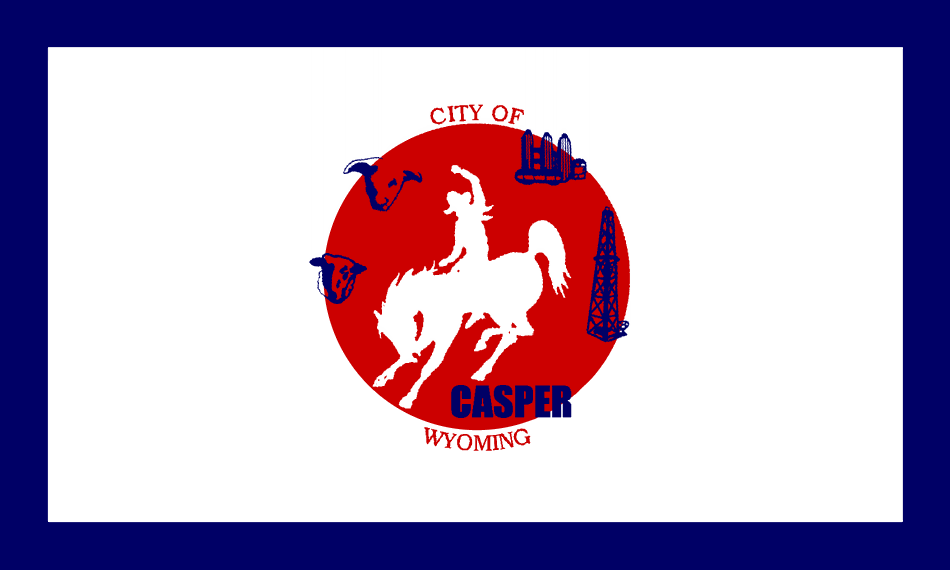
A white field framed by a blue border, a red circle at the center from which emerges the silhouette of a cowboy in the saddle. Casper's flag, adopted in 1965, is utterly frank in its iconography: the cowboy is the symbol of Wyoming, period. No ambiguity, no irony. It is the West, and it owns it.
Casper was born of the Oregon Trail. In 1847, the first wagon trains of pioneers crossed the North Platte River at this exact spot, taking the trail toward Utah, California or Oregon. Fort Caspar was built in 1859 to protect this strategic crossing. Tens of thousands of wagons rolled across these lands before anyone thought to settle here for good.
The Teapot Dome scandal (1921-1924), in which Interior Secretary Albert Fall was convicted of corruption for illegally leasing naval reserves to oil companies, was the first major federal political scandal in America. Casper found itself at the heart of the affair.
Casper is today a modestly sized city that lives to the rhythm of the oil cycles. When oil rises, Casper prospers. When it falls, the jobs disappear. But the city holds on, between the Rocky Mountains to the west and the endless plains of Wyoming to the east. The cowboy on a red field on the flag does not promise wealth. It promises endurance.