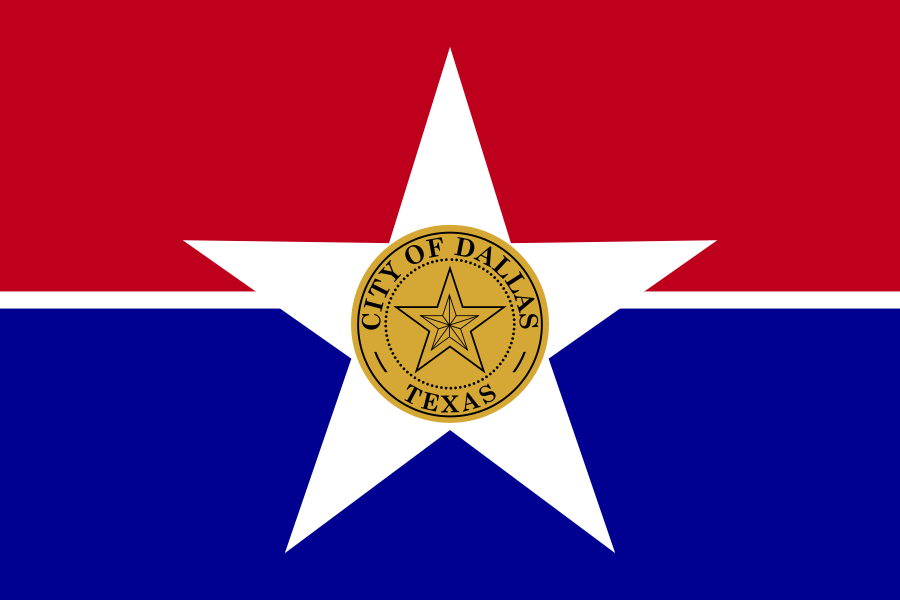
Red above, blue below, and at the middle a large white five-pointed star carrying the city's golden seal at its heart. Dallas's flag is classic and a little generic, no one would recognize it without the city's name on it. Perhaps that is intentional: Dallas has always preferred efficiency to symbolism. "Big D" does not deal in metaphor. It deals in business.
Dallas has no navigable river, no port, no natural resources at its feet. It was founded in 1841 on the Texas prairie, almost by accident. It was the railroad, arriving in 1872, that did everything: within a few years, Dallas became the hub of the Texas cotton trade, then wool, then beef. The city draws its success not from the soil but from the networks it managed to weave.
Kennedy was assassinated in Dallas, in Dealey Plaza. Lee Harvey Oswald was arrested the same day, and killed two days later by Jack Ruby. This traumatic sequence, filmed in Super 8 by Abraham Zapruder, is etched in the world's collective memory. The city bore the shame of it for years. The Sixth Floor Museum today receives 350,000 visitors a year.
Dallas rebuilt itself on oil, telecommunications, finance and sports. The Dallas Cowboys, "America's Team", are the most valuable NFL franchise in the world. Big D embodies Texan hubris and a certain idea of an America that moves forward without looking back. The blue-and-gold flag does not try to tell all of this. It states: Dallas exists. That is already something.