
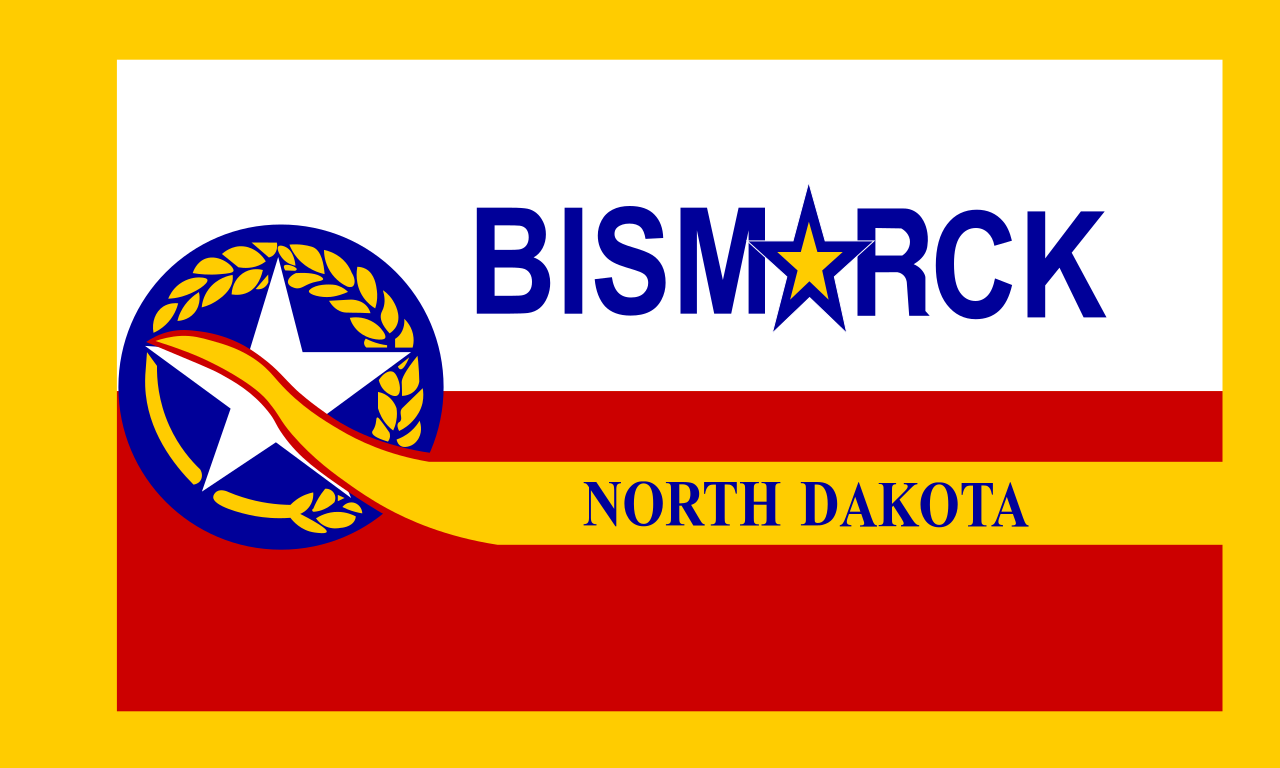
Bismarck's flag is remarkably legible, and for good reason: it is a wordmark. A golden border, a white panel where the city's name spreads in large blue capitals with a golden star standing in for the A, two red bands, a blue medallion with a white star ringed in laurel, and NORTH DAKOTA beneath. Of the meeting of cultures, of the Dakota nations who inhabited these plains, of the city born of the Northern Pacific Railway, it says nothing.
It is the political capital of North Dakota but also the gateway to the Bakken oil fields. Since 2010, the oil rush has caused the economy to explode: full hotels, doubled wages, traffic jams of pickup trucks on Interstate 94. The Capitol offices, a 21-story Art Deco skyscraper, overlook this transformation.
This wealth is extracted from a land inhabited for millennia. The state was named in 1889, but the city's name, Bismarck, was a marketing move: the German financiers of New York chose it to flatter the German Empire and attract capital. A century and a half later, the golden cross stretches over a horizon as vast as ever.