
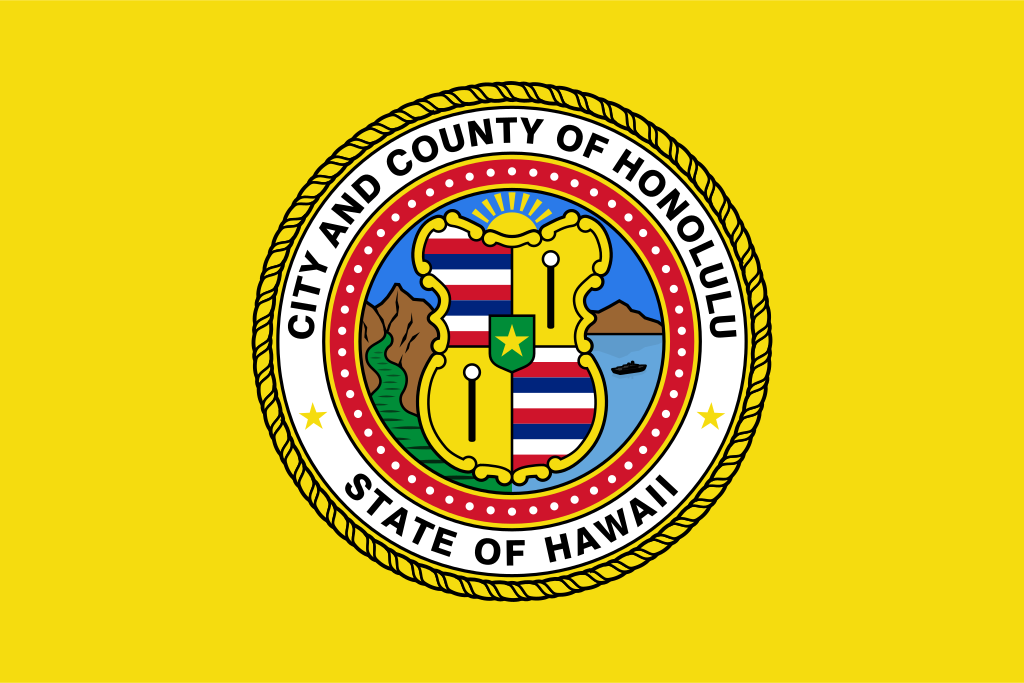
Honolulu's flag, adopted in 1960, features the municipal seal on a yellow field. Simple, almost bureaucratic, it reflects Honolulu's paradoxical status: capital of the most recent state (Hawaii joined the Union in 1959), former capital of an independent kingdom.
Honolulu means "sheltered bay" in Hawaiian. The city was the capital of the Kingdom of Hawaii from 1845 to 1893, when the monarchy was overthrown by American planters backed by U.S. Marines. Queen Liliʻuokalani, the last Hawaiian monarch, was imprisoned in ʻIolani Palace, the only royal palace on American soil, which still stands at the heart of Honolulu.
It is a strategic military hub (Pearl Harbor), an international tourist center (Waikiki Beach), and a cultural bridge between America and the Asia-Pacific. The population is predominantly Asian-American, Japanese, Filipino, Chinese, Korean.
The simple yellow flag hides a complex history: imperial annexation, loss of sovereignty, militarization, mass tourism, the rise of the Hawaiian sovereignty movement. Honolulu carries the weight of being both a postcard tropical paradise and the capital of a state whose incorporation into the Union remains contested by some Native Hawaiians. The seal on the flag says nothing, and perhaps that is intentional.