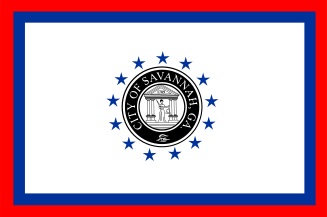
Savannah's flag frames a white field in red and blue, and sets at its center a black seal ringed by thirteen stars: a columned portico, nothing more. Not a single tree, though Savannah is a city whose soul lies in its trees. Its 22 historic squares, shaded by century-old oaks draped in Spanish moss, make it one of the most photographed cities in the South.
James Oglethorpe founded Savannah in 1733, on a bluff above the river of the same name. It is the first city of colonial Georgia, planned with an almost utopian precision: wide streets, regularly spaced squares, separate residential and commercial zones. This grid plan dotted with public squares is unique in colonial America. It has survived 300 years virtually intact.
In December 1864, General Sherman arrived at the end of his "March to the Sea", a campaign of systematic destruction of Confederate resources. But he spared Savannah, offering it to Lincoln as a "Christmas gift." The city, too beautiful to be burned, was occupied but preserved.
Today, Savannah is known around the world thanks to the novel "Midnight in the Garden of Good and Evil" by John Berendt (1994), which tells of a real murder with Savannah as its exuberant backdrop. The city looked, he said, like "a beautiful body with something dark beating at its heart." The green flag says nothing of this shadow. But the trees, they see everything.