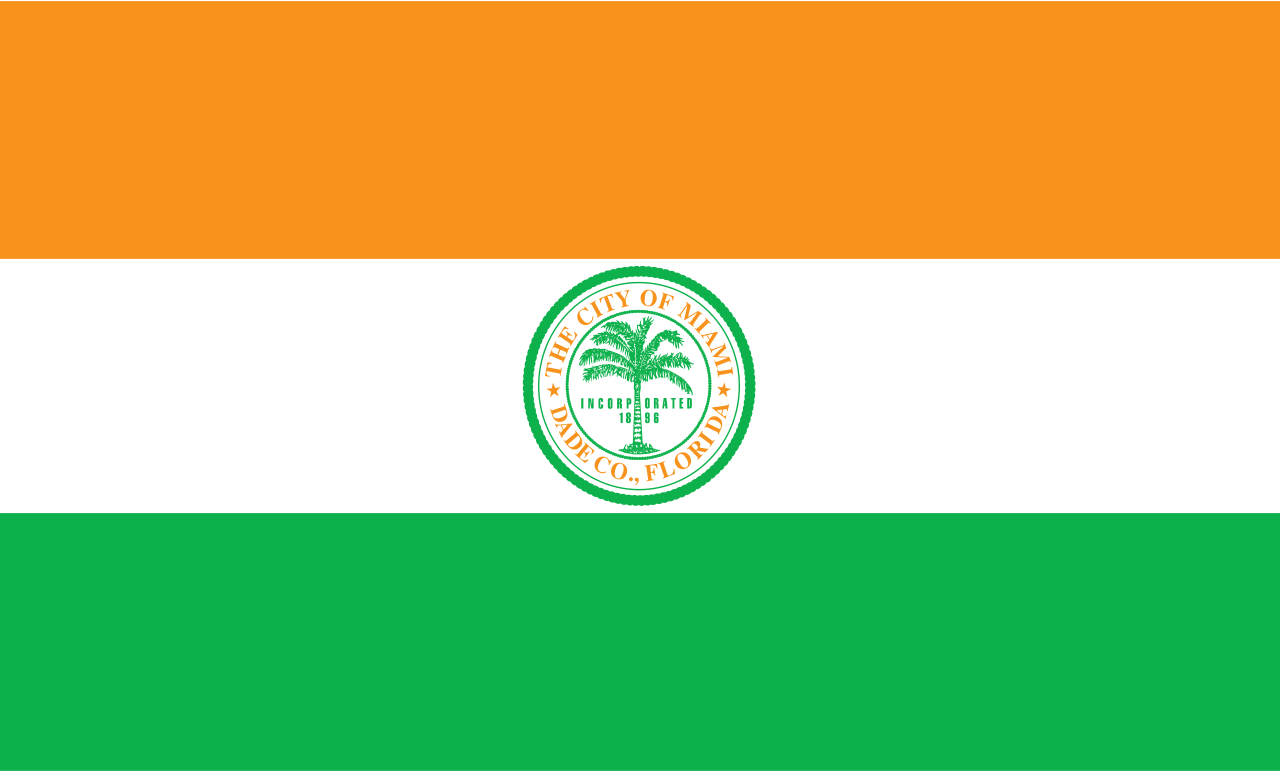
Three horizontal bands, orange, white, green, and at the center a green seal: a palm tree, the rising sun, the city's motto. This flag, adopted in 1979, visually captures what Miami is geographically: a border, a passage, a crossroads between two Americas.
Miami has existed only since 1896. It is one of the few major American cities founded largely at the initiative of a woman: Julia Tuttle, a citrus grower, convinced Henry Flagler to extend his railroad to Biscayne Bay. In exchange, she offered him half of her land. Flagler built a luxury hotel. Miami was born.
Thousands of Cuban refugees arrived with their languages, their recipes, their nostalgia and their ambitions. Little Havana became a world unto itself. Today, Miami is the Spanish-speaking capital of North America: more than 70% of its residents speak Spanish at home.
Miami is not just a postcard of Art Deco and white beaches. It is a city that looks south, toward Haiti, Colombia, Venezuela, Brazil. It is the gateway for Latin American capital, the refuge of the elites of a hemisphere in motion. The blue of its flag is that of the Atlantic that connects rather than separates.