
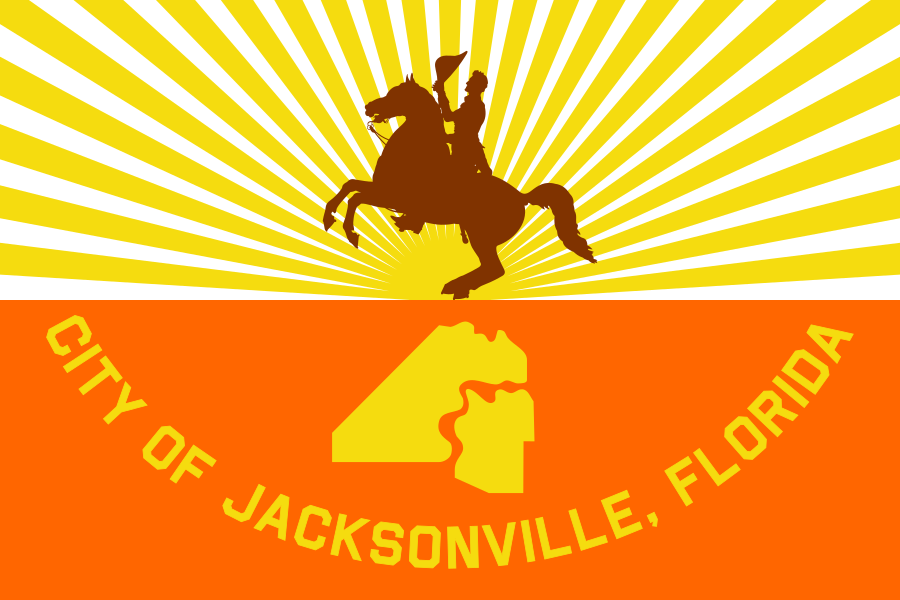
A yellow sun rises in rays across the upper half, and before it the brown silhouette of an equestrian statue: Andrew Jackson, whose name the city bears. Below, an orange band carries the city's name in an arc and the outline of its territory. Jacksonville's flag displays a confidence the city had to rebuild.
Jacksonville is absurdly large. The largest city by area in the contiguous United States, more sprawling than Rhode Island. This odd size comes from the 1968 consolidation: the city merged with Duval County, absorbing dozens of municipalities. The result: a "city" that includes beaches, marshes, suburbs, rural areas.
Johns River runs through the city from south to north, one of the few American rivers to flow northward. Along its banks: massive naval bases, a major military port, banking and logistics hubs.
The motto "Bold New City of the South" dates from the 1960s, when Jacksonville tried to reinvent itself after corruption scandals and racial tensions. The flag projects a civic harmony that the more complex history contradicts.
But Jacksonville grew, spread, absorbed. The yellow shape at the foot of the flag is exactly that: the outline of the territory consolidated in 1968, when the city merged with Duval County and became, in one stroke, one of the largest in the United States.