
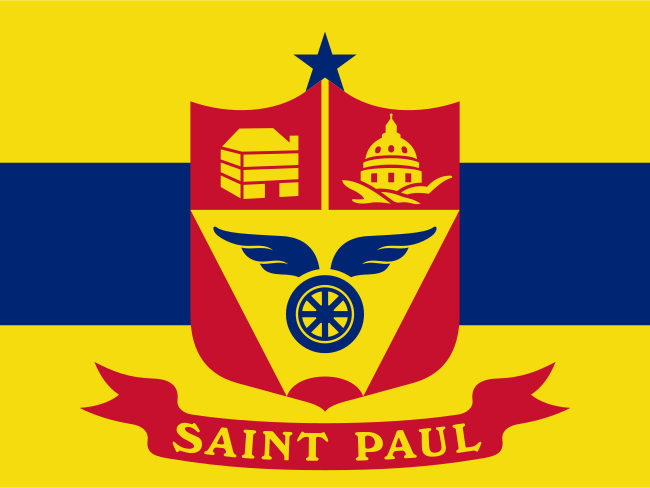
Saint Paul's flag, designed by art student Gladys Mittle and adopted on November 22, 1932, features a horizontal yellow-blue-yellow triband. The central blue band represents the Mississippi River that runs through the city. The yellow bands symbolize a bright future. A red shield in the foreground shows various aspects of Saint Paul's industry and history.
The shield contains a blue five-pointed star representing the North Star and Saint Paul's allegiance to Minnesota. The industrial symbols evoke Saint Paul's role as a major railroad and manufacturing center in the early 20th century.
Unlike flashy Minneapolis, Saint Paul is quieter, more conservative, more government-oriented. The State Capitol dominates the skyline with its white neoclassical dome.
The city was named after a Catholic chapel dedicated to Saint Paul the Apostle, built in 1841. This religious origin contrasts with Minneapolis, named after the Dakota word for "water" (mni) combined with the Greek "polis" (city). Saint Paul European, Minneapolis Native-Greek. The twins do not look alike.