
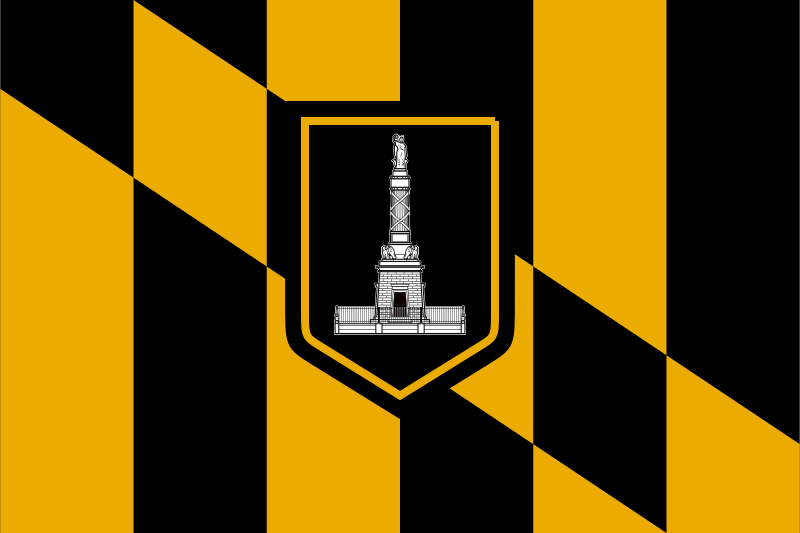
Baltimore's flag, adopted on September 20, 1915, features the heraldic banner of George Calvert, 1st Baron Baltimore: gold and black quarters (the Calvert arms) alternating with red and white quarters (the Crossland arms of his mother). It is the same design as the Maryland state flag, rare for a city.
Baltimore is defined by one moment: the British bombardment of Fort McHenry in 1814. For 25 hours, British ships pounded the fort with cannonballs and rockets. Francis Scott Key, watching from a ship, saw the American flag still flying in the morning. He wrote "The Star-Spangled Banner", the American national anthem was born here.
Baltimore was the third busiest port in America in the 19th century. The Baltimore clippers were the fastest ships in the world. European immigration (German, Irish, Italian, Polish) exploded. Seafood canneries lined the Inner Harbor. The Bethlehem Steel plants employed 30,000 people.
The factories closed. The port declined. The population dropped sharply. Entire neighborhoods, like those shown in "The Wire", were abandoned. Baltimore has one of the highest crime rates in America.
But Baltimore fights to be reborn: the Inner Harbor turned into a tourist attraction (National Aquarium, USS Constellation, Science Center), Johns Hopkins University and Hospital (world-class medical research), hipster neighborhoods like Fells Point.
The Calvert-Crossland flag captures the colonial history, but shows nothing of the modern urban struggles or of Baltimore's resilience.