
Bridgeport is a city that has lived a lot. A former industrial center of Connecticut, it was built around factories, the port, the railroad and working-class life. For decades it was a city of machines, metalworking shops, boats coming in and out of the harbor, factory whistles setting the rhythm of the days.
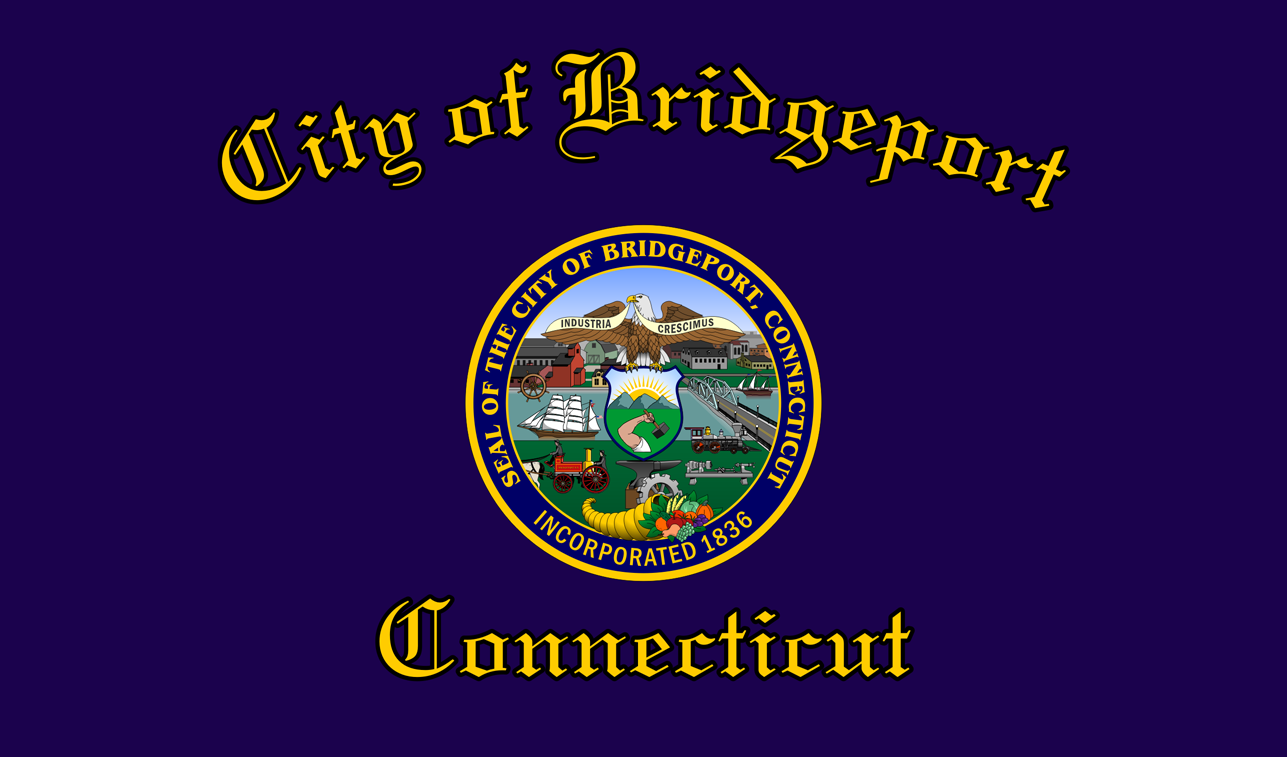
Bridgeport's flag reflects this history: a busy coat of arms, symbols of maritime trade, references to the industry that long sustained the city. It is a flag that speaks of a sturdy past, of a territory shaped by labor and exchange.
Industrial wastelands give way to cultural spaces, the docks are transformed, and the city leans on its oceanfront location to attract new residents. The flag remains the witness of an era when the city hummed with factories and ships, a working memory that still flies above its streets and buildings.
It is a flag that does not lie: it tells the story of a city that lived through an entire industrial age and that, like many cities on the East Coast, now moves between heritage and renewal.